
AI Won't Replace Designers — But It Will Replace the Ones Who Ignore It | Behrad Mirafshar
Behrad Mirafshar joins Gerry to cut through the AI hype — where the real value sits for designers, how to charge more with AI, and what scares him most about it.
Guest
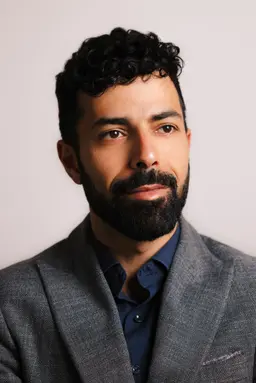
Behrad Mirafshar
Product Design, Ai
Berlin, Germany
Synthesized transcript details to compose biographical summaryThe user wants a short bio about Behrad Mirafshar based on what was shared in the transcript.DoneBehrad Mirafshar is the founder and managing director of Bonanza Design, a boutique design studio based in Berlin, and the host of the UX for AI podcast. Originally from Iran, he holds a master's in design thinking and sustainable design from Sweden and has been in Berlin since 2012. He was part of the founding team of two startups — one of which became a unicorn — before moving into consulting and eventually launching Bonanza Design during the Covid pandemic. He specialises in AI-powered product design, research, and multi-agent orchestration for enterprise clients.
View Directory Profile →Watch on YouTube
Transcript
[00:00:00] Gerry Scullion: Hey folks, and welcome back to another episode of this eight cd. My name is Jerry Scion and I'm a [00:00:05] human-centered service design practitioner based in the beautiful city of Dublin Ireland. [00:00:10] Now, today we're diving into a topic that is pretty much on every designer's feed on [00:00:15] LinkedIn and everywhere else right now.
[00:00:16] Gerry Scullion: That's AI and ux or AI and design generally, [00:00:20] not the hype, not the doom, but the practical reality of what it means for our work. I train service [00:00:25] design and ai, and I've had these conversations over the last year or two. [00:00:30] Really? What does it mean for us as we are scaling our own businesses? If you're working like myself [00:00:35] or if you're working in on an organization and AI is now being discussed, [00:00:40] potentially even replacing us, how do we handle those conversations?
[00:00:43] Gerry Scullion: This is what I covered off today with [00:00:45] our guest Rad, who is the founder of Bonanza Design and the host of the [00:00:50] UX for AI podcast. He's been deep in the weeds using AI in real client [00:00:55] projects, research and data sense making through to agents, automation and building modern [00:01:00] applications. He is fantastic, and in this conversation we explore why the real [00:01:05] value of AI driven design sits in the research phase, not just auto generate wire [00:01:10] frames here, here, how designers can use AI as.
[00:01:12] Gerry Scullion: Sparring partner and agent [00:01:15] ecosystem to move faster through the double diamond if you use the double diamond. But what [00:01:20] skills and attitudes will matter the most for designers as we head closer towards 2030? Isn't that crazy? [00:01:25] 2030. And the tough questions around bias, inclusion, data [00:01:30] ownership, and the younger generation using these tools.
[00:01:31] Gerry Scullion: What does this mean for us as practitioners as we get older? [00:01:35] If you're a UX product or service designer wondering how to stay relevant and maybe even increase your [00:01:40] value. In an AI saturated world. This episode is just for you. [00:01:45] As always, if you enjoy this episode, please do leave a like, subscribe, share it out to your [00:01:50] teammates.
[00:01:50] Gerry Scullion: We tried to cover as many interesting areas in this podcast. I know you're gonna find it [00:01:55] interesting. Please do check out Bear adss work. He's fantastic. Check out his podcast and subscribe, [00:02:00] but let's jump straight into the episode.[00:02:05] [00:02:10]
[00:02:12] Behrad Mirafshar: I'm delighted to have you on the [00:02:15] podcast. I listen to your podcast. That's, that's what has become clear. [00:02:20] Um, and I'm delighted to have you on the podcast. So, UX for [00:02:25] ai
[00:02:25] Behrad Mirafshar: mm-hmm.
[00:02:26] Behrad Mirafshar: Um, is the name of your podcast and. You [00:02:30] know, those two ladders coming together, A and I are very, very, uh, popular amongst, [00:02:35] uh, lots of business people at the moment.
[00:02:36] Behrad Mirafshar: It seems. All I have to do is open up LinkedIn for [00:02:40] 10, 15 seconds and I'll see about 10 or 15 posts about AI at the moment. [00:02:45] Before we jump into all of this interesting stuff for N ai, I'd love to, uh, get [00:02:50] a little bit of thoughts on who you are, what you two, and where you're from.
[00:02:53] Behrad Mirafshar: Well, I, [00:02:55] thanks for, first of all, having me on.
[00:02:57] Behrad Mirafshar: Jerry, it's been a pleasure. I'm a fan of the [00:03:00] podcast. Uh, you're a very good host, so hopefully I felt a bit nervous [00:03:05] coming on, but hopefully I can. Um, so about [00:03:10] myself, I'm Iranian. I've been in Berlin for over 14 years. I have master [00:03:15] in design thinking and sustainable design from Sweden, moved to [00:03:20] Berlin in thousand 12.
[00:03:22] Behrad Mirafshar: And you know, one thing led to [00:03:25] another Berlin startup scene was booming. Then I got, [00:03:30] I typically have this habit of going where the trouble is. [00:03:35] So I got dragged into the Berlin startup scene and I was part of [00:03:40] founding team of two startups. One of them became a unicorn. I had a really, you know, interesting exit [00:03:45] over there and you know, one thing led to another, became a consultant and [00:03:50] then.
[00:03:52] Behrad Mirafshar: Consulting companies and then, you know, [00:03:55] they, in Germany they say that, um, as a freelancer consultant, you cannot make [00:04:00] 50, more hundred 50,000 per year. Mm-hmm. And I, at the end [00:04:05] of the year, I dunno which, which year 2019, look at [00:04:10] my record. And I realized, oh my, I think I blew past that threshold. [00:04:15] And then my tax advisor said that, Hey, um.
[00:04:19] Behrad Mirafshar: [00:04:20] You gotta turn this into a business.
[00:04:22] Behrad Mirafshar: Yeah.
[00:04:23] Behrad Mirafshar: And then, um, [00:04:25] fast forward, beginning of the first Corona pandemic. Then I came up with this [00:04:30] brilliant idea. It's time now, now everything, every, every [00:04:35] company, every client that went ready to silence on me because of the nature of the, [00:04:40] that climate, everyone was panicking remote.[00:04:45]
[00:04:48] Behrad Mirafshar: Seriously thought about, [00:04:50] you know, turning into a business, started starting it, starting with [00:04:55] my trade name, and two years after, finally turned into a company [00:05:00] and now I'm working as under Bonanza Design, GMB [00:05:05] Hub. I'm the managing director. Still hands on.[00:05:10]
[00:05:13] Behrad Mirafshar: We're a small, uh, [00:05:15] boutique, so we don't want to go grow big for the sake of growing big. Um, [00:05:20] we like to thinker with technology. AI [00:05:25] is the elephant in the room is a supersonic tsunami that [00:05:30] is sweeping the floor across the board. Yeah. And me [00:05:35] as a UX designer design thinker, um, [00:05:40] started thinking about. All of this and realize that it's a very [00:05:45] massive opportunity, uh, here for designers, for [00:05:50] product builders, leveraging ai.
[00:05:53] Behrad Mirafshar: Also consulted with ai. I [00:05:55] wanna set up a podcast around this. Yeah, go fetch all the keywords and [00:06:00] trends and then returned to me based on all the growing trends you need to pick your. [00:06:05] UX for AI because it's gonna pop up in the Spotify [00:06:10] search and stuff like I went for that name.
[00:06:13] Behrad Mirafshar: Nice. Similar approach to [00:06:15] me.
[00:06:16] Behrad Mirafshar: Yeah, that was exactly my, my thinking when I was, you [00:06:20] know, right at the start of starting a podcast. One of the things that [00:06:25] I notice on LinkedIn, and I'm actually trying to reduce my time on LinkedIn for, for [00:06:30] this reason, because we're still kind of trying to form a lot of our [00:06:35] understanding of where AI AI sits and the term AI driven design.[00:06:40]
[00:06:40] Behrad Mirafshar: I, I'd love to get your understanding. What that actually means from your own [00:06:45] perspective, beyond the hype. So you see on, on LinkedIn at the moment, like, you know, it's [00:06:50] all about AI driven design. I'd love to get your perspective on, on how you see that [00:06:55] situation, how you see that phrase.
[00:06:57] Behrad Mirafshar: I think if you, when [00:07:00] AI driven design, the topic popped up and if you're thinking about.[00:07:05]
[00:07:05] Behrad Mirafshar: Creating wire frames or creating high fidelity [00:07:10] designs, it's a very missed opportunity. You actually, [00:07:15] um, touching the tip of an iceberg. I think [00:07:20] the main value of a power of ai, [00:07:25] especially in informing your design decision, is at the research [00:07:30] phase. I think that's where you can. [00:07:35] Tap into the power of ai because if you want to [00:07:40] truly design a service that impact a city, [00:07:45] a community, if you want to develop an application that is going to [00:07:50] talk to government at the same time to, you know, um, [00:07:55] people who need services from government, or you want to build an application that helps [00:08:00] thousands of enterprise companies.
[00:08:04] Behrad Mirafshar: You need [00:08:05] to conduct the most comprehensive research [00:08:10] campaign ever because you need to understand different voices and different pain [00:08:15] points, different personas. And [00:08:20] before ai, you would have to deal with [00:08:25] hundreds of reports and CSVs and Excel [00:08:30] sheets and this and this. So now all you could to do, do is to [00:08:35] invest in AI agents that are equipped with [00:08:40] Python scripts that basically go through [00:08:45] thousand rows of re reports and create [00:08:50] blueprint for you in terms of where to look, what to [00:08:55] look at, how to interpret the data.
[00:08:57] Behrad Mirafshar: Basically, that's where I [00:09:00] use AI the most.
[00:09:01] Behrad Mirafshar: Yeah, and with that [00:09:05] comes a lot of risks. So when you have, uh, [00:09:10] demonstrated experience in the world of research, you kind of know where the [00:09:15] potential gaps are when you see, you know, what good looks like. If you don't have that, and I think [00:09:20] this is where a lot of the, the kind of the dissonance if you want within the communities [00:09:25] where they're like, actually, you know, a lot of clients feel like they might be able to potentially do [00:09:30] research with it and ask it some questions and get some stuff back and it might completely [00:09:35] throw you in the wrong direction.
[00:09:36] Behrad Mirafshar: And every now and then, of course it might throw you in the right direction. As a [00:09:40] researcher, uh, and I've researched for 10 years, you kind of build that understanding of, [00:09:45] you know, what it looks like, um, and what good looks like and actually, which [00:09:50] potentially is a, is a nice stimulant for potential res of questions, which you could bring into the [00:09:55] physical world.
[00:09:56] Behrad Mirafshar: And I'd like to get your positioning. And where you see is [00:10:00] is ai. Going to replace the research function, do you think, or [00:10:05] How I currently see it is, it's like a, a massive brain [00:10:10] and sparring partner to quote, um, in your pocket. [00:10:15] Which one of those two do you think it is at the moment from your own perspective?
[00:10:19] Behrad Mirafshar: Such a [00:10:20] great question. I think, so [00:10:25] AI is not going to replace the researcher. Um, [00:10:30] ai also not going to replace the researcher instinct [00:10:35] as true value or true insights [00:10:40] lies. AI can provide [00:10:45] a blueprint or map of how you can navigate [00:10:50] yourself across these many documents of reports. [00:10:55] The way I'm using it is that okay.
[00:10:58] Behrad Mirafshar: Gimme executive [00:11:00] summary. Gimme a map of how I can navigate [00:11:05] through all these documents with that. [00:11:10] Then I could go to certain folder, [00:11:15] open the certain files, go to specific raw ranges, and look at the [00:11:20] data myself.
[00:11:21] Behrad Mirafshar: Yeah. Yeah. So it's, it's pretty much how [00:11:25] I see it at the moment. And like I, I've trained, uh, people in AI and design [00:11:30] and that's kind of how I've really seen it.
[00:11:32] Behrad Mirafshar: Like I think a lot of people kind of [00:11:35] misconstrue the value of it, thinking that it's gonna replace design fully. [00:11:40] It's definitely not how I see it. I see it as amplifying a lot of the, the stuff that we do and, and [00:11:45] allow us to get from A to B quicker, um, and understand and use these tools, [00:11:50] uh, for the good.
[00:11:52] Behrad Mirafshar: One of the pieces that I'd love to get your thoughts on, [00:11:55] like when it moves from research into the other worlds of say, ideation or prototyping, [00:12:00] um, how are you currently using that in your own, uh, AI stack? [00:12:05] What does that look like? And throw all the names out there. 'cause we know it's not just GPT, [00:12:10] we know there's all of these other tools, like we've got subscriptions probably coming outta our ears.
[00:12:14] Behrad Mirafshar: But I'd love to [00:12:15] hear what your current AI stack is.
[00:12:18] Behrad Mirafshar: I am using my [00:12:20] current AI stack. I'm using, um, cloud code.
[00:12:24] Behrad Mirafshar: Hmm. [00:12:25] I don't know that one by the way. Just hands up. Cloud code.
[00:12:29] Behrad Mirafshar: Cloud [00:12:30] code. Yeah. I'm sort of like a bit more advanced than, [00:12:35] um, LOV using lovable of the world.
[00:12:38] Behrad Mirafshar: Yeah.
[00:12:39] Behrad Mirafshar: Um, [00:12:40] I'm developing tools and simple to medium.[00:12:45]
[00:12:46] Behrad Mirafshar: Complex complexity applications too. [00:12:50]
[00:12:50] Behrad Mirafshar: Yeah.
[00:12:50] Behrad Mirafshar: Um, I'm using a tool also called UX [00:12:55] Pilot in parallel with FMO Make. [00:13:00]
[00:13:00] Behrad Mirafshar: Oh, nice. Did you say cloud or? Or Cloud code.
[00:13:03] Behrad Mirafshar: Cloud Code. Sorry.
[00:13:04] Behrad Mirafshar: [00:13:05] Claude. Oh yeah, I know Claude. Okay, so Claude Code and the other one is Figma Make. [00:13:10]
[00:13:10] Behrad Mirafshar: Figma make and UX pilot. I'm using UX pilot for wire [00:13:15] framing.
[00:13:15] Behrad Mirafshar: I see it. I see it as a good way of basically wire framing. [00:13:20] I could do that on cloud code as well, [00:13:25] but I'm using cloud code more on building application and building, [00:13:30] uh, websites. Nice. When it comes [00:13:35] to, um, tools for. Design, actual craft of [00:13:40] design. I think it's very evident for me that there are [00:13:45] going to stay and they're going to only get better.[00:13:50]
[00:13:51] Behrad Mirafshar: And just now I'm being, [00:13:55] um, testing GAM I three.
[00:13:58] Behrad Mirafshar: Yeah, it's just [00:14:00] that earlier on.
[00:14:00] Behrad Mirafshar: It's so powerful when it comes to creating. [00:14:05] Elegant websites. Wow. It has, [00:14:10] it has such a creative mind. I haven't seen it before, so I think, [00:14:15] I think a lot of, I think designers need to make peace with the fact that AI [00:14:20] is going to help them
[00:14:22] Behrad Mirafshar: mm-hmm.
[00:14:23] Behrad Mirafshar: With this part [00:14:25] of the design more and more, because there is going to [00:14:30] be only better models coming out. Yeah. Um, this is [00:14:35] not going to stop.
[00:14:36] Behrad Mirafshar: Yeah.
[00:14:37] Behrad Mirafshar: So you better to use them [00:14:40]
[00:14:40] Behrad Mirafshar: for sure.
[00:14:41] Behrad Mirafshar: Simply put,
[00:14:42] Behrad Mirafshar: I think, um, someone said [00:14:45] to me a few years ago, this is the worst that it's ever gonna be with ai, depending on [00:14:50] how you, how you use that.
[00:14:50] Behrad Mirafshar: And I was like, well, okay, fair enough. Um, so [00:14:55] depending on how you frame that question, um, it could be the best that it's ever been with AI if [00:15:00] you're against it, but, um. I mean, do, do you feel like [00:15:05] there's, uh, the competitive advantage that designers [00:15:10] have, um, using ai? Like what, what is that, like, [00:15:15] what is the competitive advantage for people using, using ai?
[00:15:19] Behrad Mirafshar: What do you sell [00:15:20] in as if you're marketing yourself in, because I know you've got your business at the moment. Bon Anza. [00:15:25] You know, you're really a pro your clients, since we're, we're all [00:15:30] in bed with ai, does that affect how you price, um, [00:15:35] with your clients?
[00:15:36] Behrad Mirafshar: I'm actually charging more.
[00:15:38] Behrad Mirafshar: Wow.
[00:15:39] Behrad Mirafshar: [00:15:40] Because I am providing more value.
[00:15:43] Behrad Mirafshar: Yeah.
[00:15:44] Behrad Mirafshar: Because I [00:15:45] think, I think there is this, I think a lot of designers and [00:15:50] products. Folks need to basically see that [00:15:55] as a opportunity to deliver more value.
[00:15:58] Behrad Mirafshar: Yeah. Interesting.
[00:15:59] Behrad Mirafshar: [00:16:00] And um, and I just said from [00:16:05] a current, current project I'm working on, um, [00:16:10] um, one of, one of our enterprise clients not only assign [00:16:15] one branch to us, they're assigning another branch to us because.
[00:16:19] Behrad Mirafshar: Or seeing [00:16:20] the disparity between what we are providing, [00:16:25] what we can deliver to them versus other alternatives. [00:16:30] So I think, I think it's, [00:16:35] I actually made a post about it, um, almost a year ago, [00:16:40] and it created, a lot of, it blew, [00:16:45] blew up on LinkedIn. I think 500,000 views or something.
[00:16:49] Behrad Mirafshar: Oh, wow. [00:16:50]
[00:16:50] Behrad Mirafshar: And I, that was the hook of the post, that if I were [00:16:55] a UX designer and I could afford it, I would quit everything and for [00:17:00] six months I would learn how to use ai.
[00:17:04] Behrad Mirafshar: [00:17:05] And it's very true.
[00:17:08] Behrad Mirafshar: Mm.
[00:17:09] Behrad Mirafshar: [00:17:10] Because if you, because[00:17:15]
[00:17:15] Behrad Mirafshar: two. Leverage ai, you need to understand that it's an [00:17:20] entity with character. It's not a human being. It's an entity with character. You need [00:17:25] to understand how best you can become friends with them and get them to work [00:17:30] for you. And, um, [00:17:35] on the surface level become, of course you can go to lovable, you can prompt it, you [00:17:40] can go to Gamina, you can prompt it.
[00:17:42] Behrad Mirafshar: But how you prompt it,
[00:17:44] Behrad Mirafshar: yeah. [00:17:45]
[00:17:47] Behrad Mirafshar: A lot of difference.
[00:17:49] Behrad Mirafshar: Yeah. [00:17:50]
[00:17:50] Behrad Mirafshar: For the output. How, what are, and then when you look at [00:17:55] every platform, for example, clo, the platform I'm [00:18:00] using. Mm-hmm. It offers you a lot of different innovative [00:18:05] tools or TE to use ai, for example, cloud. [00:18:10] Offers. You can on cloud, you can create skills, you can [00:18:15] create subagents, you can create hooks to remind AI to do [00:18:20] certain things.
[00:18:21] Behrad Mirafshar: That's right.
[00:18:21] Behrad Mirafshar: You can create custom commands, [00:18:25] you can create the list goes on and on. Yeah. [00:18:30] So I would welcome [00:18:35] everyone urgently to go deeper. [00:18:40] Few layers deeper because every platform you look at, chat, [00:18:45] GBT does it too. So for example, on Friday [00:18:50] I had a, I was working with a client, a friend of mine [00:18:55] start of founder, he wanted to prototype his idea.
[00:18:59] Behrad Mirafshar: [00:19:00] So we've been going back and forth for two weeks and select Pressing on building an app. [00:19:05]
[00:19:05] Behrad Mirafshar: Yeah.
[00:19:05] Behrad Mirafshar: Actually I prototyped the idea using cps. [00:19:10] Which is another breakthrough technology and cloud skills. [00:19:15] So when you [00:19:20] basically decide that, [00:19:25] okay, I'm done staying above the surface, I want to [00:19:30] go deeper, then you can actually create orchestration [00:19:35] systems that you can talk.
[00:19:37] Behrad Mirafshar: Multiple agent work together to give you an [00:19:40] output. Yeah. So these are the values, these are the true values of [00:19:45] the ai.
[00:19:46] Behrad Mirafshar: So when it comes to automating those different pieces, I know you've [00:19:50] got the hooks and, and Claude and stuff, but do you use services like [00:19:55] make to enable, um, if this, then that kind of scenarios?[00:20:00]
[00:20:00] Behrad Mirafshar: I, I use zipping a lot. I think zip. [00:20:05] Um. Zipline, um, amongst Zipline make NN na 10. [00:20:10] I like Zipline because it's much simpler for me to understand this [00:20:15] automation platform like NA 10 or make for me, I'm not gonna sugar quote. [00:20:20] That is complex for over overly complex. Yeah. I prefer to, [00:20:25] there, there is different ways of doing it, so I'm preferring to basically.[00:20:30]
[00:20:30] Behrad Mirafshar: Instead of doing automation on make, do the automation on cloud [00:20:35] desktop where I am 24 hours. Yeah. Um, [00:20:40] but I've seen, I've seen peers doing, doing [00:20:45] magical stuff on make and any 10.
[00:20:47] Behrad Mirafshar: Yeah.
[00:20:48] Behrad Mirafshar: I'm like, wow.
[00:20:49] Behrad Mirafshar: It is a [00:20:50] learning curve though.
[00:20:51] Behrad Mirafshar: It's a learning curve and it's, it's all about can you afford [00:20:55] it? Do you have the time to invest in it?
[00:20:57] Behrad Mirafshar: True. So you mentioned [00:21:00] there about if you had the luxury of taking six months off and really, [00:21:05] um, getting into bed with AI and you know, getting really, really good at it. [00:21:10] Where did you go to get really good at it? And what kind of steps and what tips [00:21:15] do you give to people who want to get even better at it than they currently?
[00:21:19] Behrad Mirafshar: I [00:21:20] think great question you are asking. Um, I [00:21:25] think. I'm talking from a [00:21:30] non-technical, I, I, I know enough, but my understanding [00:21:35] of building modern applications and modern tech stacks [00:21:40] compared to two years ago has improved, [00:21:45] um, significantly. I think web, like modern [00:21:50] web application 1 0 1 is. Is [00:21:55] what I would suggest to everyone.
[00:21:57] Behrad Mirafshar: Just understand how modern [00:22:00] applications get built. Yeah. Understand a typical next JS three [00:22:05] js, you know, file structure. So when AI [00:22:10] return to you a bunch of files, you can actually. You know, find the [00:22:15] relevant files that certain codes are being implemented right now in your Yeah. [00:22:20] Um, I think that's, that's where I start, that's where I'm actually investing a lot of [00:22:25] time to get better at how do APIs communicate to each other.[00:22:30]
[00:22:30] Behrad Mirafshar: Right. Very important and in a simple [00:22:35] thing to understand. I think that's, that's would be, [00:22:40] that would be the, um. Starting point. And then there is [00:22:45] another track also beside that. Is that how to prompt ai? [00:22:50]
[00:22:50] Behrad Mirafshar: Mm-hmm.
[00:22:51] Behrad Mirafshar: What tools, first of all, pick your poison cha. GBT, [00:22:55] clot, you know, perplexity gr. I just [00:23:00] cannot.
[00:23:00] Behrad Mirafshar: Manus, there's too many of them. Like, pick your platform that you're [00:23:05] comfortable with and really invest in that platform. Really try to understand how you [00:23:10] can, because. You have one layer that would be the AI model, how the AI model [00:23:15] is trained is one thing, and then how that specific [00:23:20] platform, um, and what capabilities that the specific platform [00:23:25] offering to would be another.
[00:23:26] Behrad Mirafshar: Yeah, this often I think [00:23:30] people underestimating how important it's. [00:23:35] We think, okay. I can prompt anything. I can write anything. That's it. That's prompting. But [00:23:40] no, actually the way you prompted the limitation, the bounds, um, [00:23:45] um, that you introduce in your prompt is actually going to, [00:23:50] um, help you a lot of time down the road.
[00:23:53] Behrad Mirafshar: Yeah.
[00:23:53] Behrad Mirafshar: And by a lot of time it [00:23:55] could be saving you days of extra work. [00:24:00] But just making a good prompt in the beginning. It doesn't need to be long, it needs to be very specific, [00:24:05] have bounce and limitation, tell them what to do and not to do. I think these [00:24:10] are the things that I would say. Um, and then later down their [00:24:15] path, automation orchestration, using multiple agents.
[00:24:19] Behrad Mirafshar: That's [00:24:20] important, especially for designers and product builders. Um, you [00:24:25] wanna basically go from. Do the go through the double [00:24:30] diamond process over and over again. And that's a recipe to [00:24:35] create different agents to help you across the double diamond process. [00:24:40] Ideation agent, research agent, wire framing [00:24:45] agent, front end agent.
[00:24:46] Behrad Mirafshar: So these are the things that you could, you could do,
[00:24:49] Behrad Mirafshar: could
[00:24:49] Behrad Mirafshar: [00:24:50] explore and then yeah, then it, you could, you know, you could, by the end [00:24:55] of it, you could. See yourself as a person that [00:25:00] could run an entire company by bunch of agents. Yeah, of course. You cannot remove [00:25:05] yourself from the process. You cannot remove your team from the process.
[00:25:08] Behrad Mirafshar: It doesn't mean that you, [00:25:10] you just run these agents and they burn token for you and they return to you great [00:25:15] results of, more often than not, the result is garbage. [00:25:20]
[00:25:20] Behrad Mirafshar: Yeah.
[00:25:21] Behrad Mirafshar: And it's because you let them do it. So you need to always [00:25:25] intervene. So it's not like, okay, I'm now running all these agents and I can just go sit [00:25:30] in by the beach and sit, you know, drink, drink my cocktail.
[00:25:33] Behrad Mirafshar: That's not gonna happen. You have [00:25:35] to sit and you have to really orchestrate an or, you know, conductor of orchestra [00:25:40] doesn't sit. He's very engaged. He's more, we could say he's more [00:25:45] engaged than the musicians. And, um,
[00:25:48] just
[00:25:48] Behrad Mirafshar: to one end, but they're just going further [00:25:50] is why I say it. Everyone is still running, but with ai you're just going [00:25:55] further,
[00:25:58] Behrad Mirafshar: but you, yeah, [00:26:00] I mean, that's one way of, of, of looking at it. I, I do have a question though. [00:26:05] Um, because this is human-centered design, right? Do you [00:26:10] feel AI is helping us getting closer to the truth of [00:26:15] human-centered design, or is it something that is maybe taking us away from it? [00:26:20]
[00:26:21] Behrad Mirafshar: It can be both more often than not the [00:26:25] second.
[00:26:25] Behrad Mirafshar: Yeah,
[00:26:26] Behrad Mirafshar: because I've seen [00:26:30] how I use AI and I've seen how others are using ai. If you [00:26:35] let it run you, you have to always intervene.
[00:26:39] Behrad Mirafshar: Yeah. [00:26:40]
[00:26:40] Behrad Mirafshar: Always. You need to make your own mark. You need to basically [00:26:45] say, I do not like this. You need to have an opinion.
[00:26:48] Behrad Mirafshar: Mm-hmm. [00:26:50]
[00:26:50] Behrad Mirafshar: And if you don't do this, the humanness of it [00:26:55] will be lost.
[00:26:56] Behrad Mirafshar: Yeah. You are just getting resolved based on statistic and [00:27:00] probability. Yeah. And there is no human in it.
[00:27:03] Behrad Mirafshar: Yeah.
[00:27:03] Behrad Mirafshar: And also [00:27:05] certain areas, um, I do not let AI. [00:27:10] I do it, it's completely up to me. So, for example, I was creating a [00:27:15] site map for a massive, you know, um, project. [00:27:20] I, I've been doing it for four hours myself.
[00:27:24] Behrad Mirafshar: [00:27:25] I had the raw data and I create the mood poor of all the potential ideas that [00:27:30] ai, you know, yeah. Spit it out to me in my wall, [00:27:35] digital wall. But I was going through. Was thinking, going [00:27:40] through it like, you know, certain part of the process is you and you only. [00:27:45]
[00:27:45] Behrad Mirafshar: Yeah.
[00:27:49] Behrad Mirafshar: I [00:27:50] still am very hands-on even when it comes to research, you know, creating [00:27:55] surveys, setting up session guides and so forth. Like it's still me at the end of the day doing it, but I'm [00:28:00] using it like a, um, like an assistant almost that really [00:28:05] helps fill in my, kind of my blind spots in the pieces. So [00:28:10] yeah, you're right, it can go both ways.
[00:28:12] Behrad Mirafshar: Um, and it's not always one direction at all at the times is [00:28:15] my understanding. Um. Because your, your podcast is [00:28:20] called AI for ux. Um, I'm keen to understand where you think the [00:28:25] UX discipline, uh, is that something that you [00:28:30] feel is more susceptible to shrinking or, uh, [00:28:35] evolving, uh, or even potentially exploding because of ai?
[00:28:39] Behrad Mirafshar: I think, [00:28:40] I think it's more like evolving and exploding.
[00:28:43] Behrad Mirafshar: Yeah. [00:28:45]
[00:28:46] Behrad Mirafshar: I think the, the new generation of applications [00:28:50]
[00:28:50] Behrad Mirafshar: Sure.
[00:28:51] Behrad Mirafshar: Are more flexible, more intelligent, [00:28:55]
[00:28:55] Behrad Mirafshar: yeah.
[00:28:55] Behrad Mirafshar: More, um, tuned to your [00:29:00] responses.
[00:29:01] Behrad Mirafshar: Mm-hmm.
[00:29:01] Behrad Mirafshar: Just to give you[00:29:05]
[00:29:05] Behrad Mirafshar: an analogy is that few years back, you would click on [00:29:10] generate blog, generate content, generate report button. Then you would have [00:29:15] to wait for a couple of seconds to minutes and then you would get the report. [00:29:20] You would get bothered, no, I didn't want this, or this and that. Then you would just go [00:29:25] to the interface, change certain parameters, report, generate again [00:29:30] on sounds clear, and now what [00:29:35] you could do, you can press stop.
[00:29:37] Behrad Mirafshar: Typing. Hey, I want this and this and this. [00:29:40] I see it in your initial report that's not reflecting, but do it again. [00:29:45] So the interfaces and the UX is going from a linear [00:29:50] input output to input bunch of inputs in the [00:29:55] middle of the way along the way till you get to the output. [00:30:00] So actually, when you think about it.
[00:30:04] Behrad Mirafshar: Now we [00:30:05] have a lot more human in the loop.
[00:30:07] Behrad Mirafshar: Yeah.
[00:30:08] Behrad Mirafshar: We're allowing users to be more [00:30:10] involved and have more authority in generating the output, [00:30:15] and that's what gets me really excited. How we can allow users to, [00:30:20] to undo the, uh, responses. To affect the [00:30:25] responses in real time. And I [00:30:30] think it's the entire, like every app that we know is [00:30:35] going to go through that.
[00:30:36] Behrad Mirafshar: Yeah.
[00:30:37] Behrad Mirafshar: Overhaul. So
[00:30:39] Behrad Mirafshar: a hundred [00:30:40] percent.
[00:30:40] Behrad Mirafshar: And so I don't understand UX designers are worried about their jobs. Like, look, actually there is [00:30:45] going to be more jobs for you.
[00:30:46] Behrad Mirafshar: Yeah, just expect you to do, do more, I think [00:30:50] with, with the power of ai. Can I ask you a question? Because you mentioned [00:30:55] there that, you know, you went from freelancers to setting up your business and [00:31:00] you're hiring, uh, and you have designers that work with you.
[00:31:03] Behrad Mirafshar: Um, if [00:31:05] we're managing, I have got a DeLorean in the back of my house here, and we're gonna go. [00:31:10] Just go for a little spin around and go [00:31:15] 88 miles per hour and where we're going, we're not gonna need [00:31:20] roads. Um, and it's 2030, right? [00:31:25] Um, and you're, you land back in Berlin, how? [00:31:30] Is it gonna change in your perspective when you're hiring for designers, [00:31:35] you're mainly in the product design space.
[00:31:37] Behrad Mirafshar: I, I understand from speaking to you, [00:31:40] what is it gonna look like? What's the landscape gonna look like in 2030 from your [00:31:45] own eyes?
[00:31:49] Behrad Mirafshar: It's [00:31:50] another good question. I think. I think, you know, you remember that in [00:31:55] our time. I mean, at least I, you know, got into design [00:32:00] space in 2012. I was working with, uh, [00:32:05] Photoshop for website design and then Illustrator for app design. Then, [00:32:10] then after Balsamic Af Balsamic, then after few years, [00:32:15] a sketch on Mac introduced after Fevers, Figma [00:32:20] introduced.
[00:32:22] Behrad Mirafshar: But now you, when you look at, it's, every [00:32:25] week there is a new tool. Yeah. Every second week. Yeah. So I think the [00:32:30] pace of keeping up with new technologies, new [00:32:35] tools is going to increase even more. And it's, [00:32:40] it's going to saturate at some point, but [00:32:45] it's going to be more and more better tools. Yeah. So when I'm [00:32:50] hiring, I'm hiring for attitude.
[00:32:53] Behrad Mirafshar: Yeah. [00:32:55]
[00:32:55] Behrad Mirafshar: So 2030, we're in the future now, remember?
[00:32:58] Behrad Mirafshar: Yeah.
[00:32:58] Behrad Mirafshar: No one known. We've parked. [00:33:00] Parked the DeLorean at the back. No one's known. No. So will there be more bums on the [00:33:05] seats in design studios, do you think?
[00:33:07] Behrad Mirafshar: I think so. I think so. Yeah. Because? [00:33:10] Because I think, I think there will be, there will be, [00:33:15] there would be maybe overall [00:33:20] headcount shrinks.
[00:33:24] Behrad Mirafshar: There is, [00:33:25] we still need designers and I think designers will thrive [00:33:30] in 2030, that they are willing to, they have this [00:33:35] never ending curiosity to learn new things.
[00:33:38] Behrad Mirafshar: Yeah, [00:33:40] that's true. A proven and track history of, of learning [00:33:45] and adopting.
[00:33:46] Behrad Mirafshar: And there are, so there's, I, I met a lot of these [00:33:50] designers and creatives.
[00:33:52] Behrad Mirafshar: They have this hunger for, oh, this is a, [00:33:55] they get just excited about it. Oh, this is, I can do this and this and this and this. [00:34:00] And then when you task them, Hey, can you do something with this new tool in two weeks? And they [00:34:05] come back in one week, Hey, I've done it. What can I do now? So I think this, [00:34:10] the folks with this attitude and mindset are going to have a very [00:34:15] exciting career from now to 2013 and 2013 onwards.[00:34:20]
[00:34:20] Behrad Mirafshar: Okay. Well I only have one piece of plutonium left to get us back. [00:34:25] I do to 2025. So we can't go to 2040, unfortunately. Maybe that's another [00:34:30] episode, but we're gonna go back to 2026 here now, right? Or 2025. [00:34:35] So we're recording this in 2025. I'm already in 2026 in my head. Um. [00:34:40] I wanna ask you, like I've, I work with, you know, government organizations [00:34:45] and NGOs and so forth, and, you know, obviously they're sitting there and [00:34:50] they may not have the power to flick the AI switch on, and they're, they're, you know, kind of [00:34:55] waiting and they may have AI in their pocket.
[00:34:57] Behrad Mirafshar: They may have GPT or something going on, [00:35:00] and that's creating a quandary around data and security and stuff because they're seeing the [00:35:05] potential in their pockets, but yet at their fingertips, at their desktops. They, they don't, they can't release [00:35:10] that power sometimes. I know they might do, they might just dip into GPT [00:35:15] on their phones, but they're not meant to be doing that, so we're not gonna talk about that.[00:35:20]
[00:35:20] Behrad Mirafshar: How do you see them being able to unlock, [00:35:25] um, AI within their organizations? So what, what can they do and [00:35:30] from your own perspective, what are the organizational traits? [00:35:35] Where organizations have managed to flick that switch quicker. 'cause you know, and I know the sooner they [00:35:40] flick that switch, um, you know, the better.
[00:35:43] Behrad Mirafshar: But we need to make sure that the [00:35:45] conditions are right. So there's two questions in that[00:35:50]
[00:35:51] Behrad Mirafshar: local lms. I think that would be the answer. I [00:35:55] think the LLMs on their own servers with bounds. Because they're dealing with a lot of, I [00:36:00] really do not want governments to use JGBT for my sensitive information.
[00:36:04] Behrad Mirafshar: [00:36:05] Hmm.
[00:36:05] Behrad Mirafshar: I I'm against it all the way.
[00:36:08] Behrad Mirafshar: Yeah.
[00:36:08] Behrad Mirafshar: So I, I think they need to, [00:36:10] they need to, um, have their, um, lms [00:36:15]
[00:36:15] Behrad Mirafshar: Yeah.
[00:36:15] Behrad Mirafshar: It could be line sense, but it needs to be absolutely clear that data [00:36:20] stays on their own. Servers not gonna leave it. Yeah. And, [00:36:25] and, um. I think that should be the case. This also [00:36:30] like not only having LLMs on their own environment, the [00:36:35] tooling around it. I think the reason that we are using chat GBT or [00:36:40] cloud versus uh, open source, uh, LLM, is that the [00:36:45] tooling around it.
[00:36:45] Behrad Mirafshar: When you ask chat g BT to create a PDF for me, create a PDF for [00:36:50] you. The tooling around the LM makes you drawn to this platform. Yeah, [00:36:55] so I think. I think I'm, I'm not too worried about, uh, [00:37:00] LLMs to be in government environment because that's already being done [00:37:05] now. Yeah. But tooling around it I think is more important.
[00:37:08] Behrad Mirafshar: If, for [00:37:10] example, um, employees want to, um, make sense [00:37:15] of the report and create a report out of another report, can that [00:37:20] LLM provide it? Is there enough tooling around it? Because [00:37:25] otherwise still a lot of folks, uh, are not judging their actions, [00:37:30] have to go on their chat, bt on mobile to do certain things because the tooling [00:37:35] around it allows them to do certain things that they couldn't do with the LMS that [00:37:40] are being provided in their organization.
[00:37:43] Behrad Mirafshar: Yeah. Okay. So a [00:37:45] localized LLM um, is, is one way of kind of approaching that, [00:37:50] looking at the organizational conditions. Um, like I, I've, I was in [00:37:55] yesterday with an executive leadership team and you know, they've got [00:38:00] deprecated technology solutions living within the organization. And [00:38:05] again. I'm talking about UX and UX isn't even in the [00:38:10] organization.
[00:38:10] Behrad Mirafshar: It's, you know, an NGO and they're hearing, and they're expected to do an awful [00:38:15] lot more with, you know, the same amount of budget each year. That's becoming more difficult. [00:38:20] So from your experience working in primarily AI and product [00:38:25] design, I'd love to get your thoughts on what you feel. [00:38:30] Are there are, are the true conditions when you know that you're ready to flick that switch, but what does [00:38:35] that look like from your own eyes?
[00:38:36] Behrad Mirafshar: You know, um, I [00:38:40] work predominantly with, um, traditional businesses. Enterprises have been around [00:38:45] for like, you know, 30 years, 20 years. I think data sovereignty, owning your [00:38:50] own data streams is, is something that [00:38:55] still in 2025, a lot of. Companies are facing.
[00:38:59] Behrad Mirafshar: Yeah. [00:39:00]
[00:39:00] Behrad Mirafshar: You know, we had the client that simply, they were using a legacy [00:39:05] software from early 2000 that [00:39:10] wouldn't allow to capture their customer data.
[00:39:13] Behrad Mirafshar: They didn't have any access to. [00:39:15] So if you cannot access your customer data, how can you use ai? Yeah. [00:39:20] So the first is that, and I would say that that. [00:39:25] If you are hearing this and you're resonating with this, you don't need [00:39:30] AI right now.
[00:39:31] Behrad Mirafshar: Mm-hmm.
[00:39:31] Behrad Mirafshar: You need to own your data streams. You [00:39:35] need to basically be able to pipeline them very well because AI needs data.[00:39:40]
[00:39:40] Behrad Mirafshar: Yeah.
[00:39:41] Behrad Mirafshar: Without data, there is no ai. Yeah, absolutely. [00:39:45] And, and I would say when I am talking to, [00:39:50] you know, potential, um, projects and clients. What [00:39:55] I see first and foremost is that there are certain crucial data streams to [00:40:00] provide certain services that they don't have any control over. So first control over data.[00:40:05]
[00:40:05] Behrad Mirafshar: Yeah. So. [00:40:10] Picture a profile of whoever it is you're speaking to. If they can do that, [00:40:15] maybe there's a, a case there for them to, their data is in a decent state [00:40:20] to be able to actually elevate the use of ai, is what I'm hearing. Is that right?
[00:40:24] Behrad Mirafshar: [00:40:25] It's, and then also like, you know, um. We talk about [00:40:30] UX design. What is ux, user experience design, and what do we do as [00:40:35] first and foremost, we create user personas.
[00:40:37] Behrad Mirafshar: We create a [00:40:40] characteristic of our different user types. So if there is no data [00:40:45] available, how can UX designers look into your, you know, data and understand who the [00:40:50] users are?
[00:40:51] Behrad Mirafshar: Yeah.
[00:40:51] Behrad Mirafshar: What do they do? So it's, it's all, [00:40:55] everything. The digital transformation. I think first and foremost, start with [00:41:00] owning your data and being able to [00:41:05] pipeline the really well to any AI agent that you want to use or [00:41:10] dare I say to any UX designer, you want to get involved or researcher to make sense [00:41:15] of this, to create experiences that will serve your customers better.
[00:41:19] Behrad Mirafshar: Yeah. [00:41:20] Well that's, that's really solid advice. Um, um, there's so [00:41:25] many things that are cropping up into my mind as we're speaking. Um, and I [00:41:30] know people that are listening that we've had discussions about ai and I'd love to get [00:41:35] an understanding of, um, your own thoughts around what potentially scares you about ai.[00:41:40]
[00:41:41] Behrad Mirafshar: There's a bit of bias in that. I'm determining that there is a, something scares [00:41:45] you.
[00:41:46] Behrad Mirafshar: I think what scares me the most about AI is [00:41:50] that[00:41:55]
[00:41:55] Behrad Mirafshar: I'm a father.
[00:41:57] Behrad Mirafshar: Okay.
[00:41:58] Behrad Mirafshar: I'm very mindful [00:42:00] about how younger generation using ai
[00:42:03] Behrad Mirafshar: mm-hmm.
[00:42:04] Behrad Mirafshar: [00:42:05] All these models are biased.
[00:42:07] Behrad Mirafshar: Yeah.
[00:42:08] Behrad Mirafshar: They're made of weight and [00:42:10] biases, some researchers defined.
[00:42:14] Behrad Mirafshar: Yeah.
[00:42:14] Behrad Mirafshar: [00:42:15] Um, they're biased to offer you an answer when they don't know the answer [00:42:20] because that's how the reward mechanisms are defined for them.[00:42:25]
[00:42:25] Behrad Mirafshar: So, um, when it comes to topics like [00:42:30] legal health, mental health, [00:42:35] I'm very worried.
[00:42:39] Behrad Mirafshar: We are the [00:42:40] adults here. We can, we can, sometimes I cannot even tell whether this is a good [00:42:45] advice or not. So if I cannot tell that this is a good advice, how can a 13 years old, [00:42:50] 14 years old, 17 years old, can tell? Yeah. And this is something that is very worrying [00:42:55] for me. And, um, I think there needs to be more [00:43:00] clarity and guidelines over how younger generation are using it.
[00:43:04] Behrad Mirafshar: [00:43:05] Uh, that is on the. Micro level. On the macro level, I think, [00:43:10] I think, I think for profit incentive [00:43:15] that a lot of these companies have.
[00:43:18] Behrad Mirafshar: Mm-hmm.
[00:43:19] Behrad Mirafshar: [00:43:20] Um,
[00:43:23] Behrad Mirafshar: I dunno if you notice when you use Chad [00:43:25] GBT, these, especially with Chad g, BT five, when you say some, when you [00:43:30] prompted it return to you, we always ask you a question. Do you want me to do [00:43:35] this for you also? Mm.
[00:43:37] Behrad Mirafshar: Yeah, that's right.
[00:43:38] Behrad Mirafshar: So why? [00:43:40] Because it creates more engagement, stickiness, more time on app. [00:43:45] That's a metrics, Sam, the likes of Sam Altman could use and raise [00:43:50] hundred billions of new investment.
[00:43:52] Behrad Mirafshar: Yeah,
[00:43:53] Behrad Mirafshar: so, [00:43:55] so when for for-profit incentives become a [00:44:00] factor, a driving factor, then truth seeking or [00:44:05] providing. Accurate answer will become [00:44:10] secondary.
[00:44:11] Behrad Mirafshar: Yeah, I definitely hear [00:44:15] you in the mental health, health space, and I see the, the shift in [00:44:20] the user experience in the responses in the last number of weeks.
[00:44:24] Behrad Mirafshar: And I, at [00:44:25] something I, I observed when I was training last week, there was a few different shifts as well. [00:44:30] I, I was training people from the Middle East last week and we [00:44:35] noticed. The, the gaps in, um, the room was so [00:44:40] quickly they said like, oh, how it responds in Arabic versus how it responds in [00:44:45] English are completely different.
[00:44:46] Behrad Mirafshar: And
[00:44:47] Behrad Mirafshar: the, it's always better to, to [00:44:50] prompt in English at the moment. So how, how do you see. [00:44:55] Us elevating the marginalized voices and the voices that [00:45:00] aren't as well developed in within the AI world to [00:45:05] ensure that we're not just reaffirming and [00:45:10] elevating a white colonial. Here I go again. People are saying a white [00:45:15] colonial, potentially American, Silicon Valley slash British, [00:45:20] um, imperialistic view of the world.
[00:45:22] Behrad Mirafshar: That's something that. We [00:45:25] all practice within human-centered design, that everyone's equal, everyone is, [00:45:30] um, you know, everyone is sort of given a fair chance, A fair goes, you'd say in [00:45:35] Australia, but yet AI isn't there yet. Like what do we need to do to, to [00:45:40] ensure that we're covering off all those gaps?
[00:45:43] Behrad Mirafshar: Right.
[00:45:43] Behrad Mirafshar: It touches upon what [00:45:45] I said it just because these are like for-profit open AI was a nonprofit [00:45:50] turned into for-profit.
[00:45:51] Behrad Mirafshar: Yeah.
[00:45:52] Behrad Mirafshar: So you, you would see how [00:45:55] lucrative it is that a per, like a organization that [00:46:00] was actually made for nonprofit.
[00:46:03] Behrad Mirafshar: Yeah.
[00:46:03] Behrad Mirafshar: They see, [00:46:05] um, the potential, you know, upside of turning [00:46:10] into for-profit and they just lost all their values.
[00:46:13] Behrad Mirafshar: Yeah.
[00:46:13] Behrad Mirafshar: So this is how [00:46:15] worried I'm when, um, and because [00:46:20] all these companies are for profit.
[00:46:22] Behrad Mirafshar: Yeah,
[00:46:22] Behrad Mirafshar: they will look at the regions that they [00:46:25] pay. They pay the most subscription.
[00:46:28] Behrad Mirafshar: Sure.
[00:46:28] Behrad Mirafshar: Right. So [00:46:30] certain, certain regions, certain parts of the world that are using these models are for [00:46:35] free. On the free tier. I think a in the future, in near future, [00:46:40] they won't have access to it because the honeymoon of AI is over [00:46:45] and every token counts.
[00:46:47] Behrad Mirafshar: So they won't receive this. [00:46:50] Um, models anymore, in my opinion.
[00:46:52] Behrad Mirafshar: Yeah.
[00:46:53] Behrad Mirafshar: And they may have to rely [00:46:55] on open source or, or models that are from China, which is a lot [00:47:00] cheaper than models from, from, um, in the countries. And [00:47:05] also to your point, regarding voices and marginalized voices. I'm afraid they're not, [00:47:10] that's not gonna be at risk because it's not part of the profit scheme.
[00:47:13] Behrad Mirafshar: The business model. Yeah, [00:47:15]
[00:47:15] Behrad Mirafshar: the business model. And I think the gap that we've been trying [00:47:20] to fight for in the service design community for years is going to ever increase [00:47:25] the ai because it's a, again, it's a supersonic tsunami. [00:47:30] Yeah. And it's a cache cow machine. It's not a cache cow machine. It's just never ending [00:47:35] printing machine.
[00:47:36] Behrad Mirafshar: Yeah. And you don't have any incentive to give power [00:47:40] to the marginalized voices. I
[00:47:41] Behrad Mirafshar: know. I mean, I'm trying not to [00:47:45] end this episode on a, on a downer.
[00:47:48] Behrad Mirafshar: Yeah.
[00:47:49] Behrad Mirafshar: [00:47:50] So we we're, we're, we're covering off lots of, uh, lots of the negative aspects of it, [00:47:55] but like we know that there's a potential there and we know from a [00:48:00] practitioner perspective there's things that we need to be across and things we need, we need to be aware of.[00:48:05]
[00:48:05] Behrad Mirafshar: Um. Bay Rad. Look, it's been fascinating to, to speak and to peek [00:48:10] behind, you know, how you're seeing and how you're using ai, um, [00:48:15] over the last number of years. Um, is it okay if I put a link to your, [00:48:20] your LinkedIn? I, I know you're, you're hyperactive on LinkedIn, you. Um, not hyper [00:48:25] active. You're very active on LinkedIn.
[00:48:27] Behrad Mirafshar: You're not on there like [00:48:30] doing, doing TikTok dances, but, uh, I know you're very active, so if it's okay, I'll [00:48:35] put a link to your LinkedIn in there. I know people would love to follow you and learn more and follow your journey as [00:48:40] well. Hope I
[00:48:41] Behrad Mirafshar: appreciate that. Yeah, thanks a lot for having me. I didn't, I think.
[00:48:44] Behrad Mirafshar: I [00:48:45] think this, these conversations, it's, it's not negative. I would say. I think we need, I [00:48:50] think I sympathize and appreciate what you're trying to [00:48:55] do, Jerry, is that we have to talk about this stuff.
[00:48:58] Behrad Mirafshar: Yeah.
[00:48:58] If
[00:48:58] Behrad Mirafshar: you don't talk about this stuff, [00:49:00] no one would notice. I mean, to pay attention to where these things is going.
[00:49:04] Behrad Mirafshar: A hundred [00:49:05] percent. And that's why I love bringing in people with, uh. Similar, but yet different [00:49:10] perspectives. It's really valuable to, to hear your own thoughts on this. So [00:49:15] again, listen, I thank every episode or thank every guest that comes on, uh, for, on [00:49:20] the podcast, for their, their time and energy. And also, as I said, the vulnerability of being able to go left and right and [00:49:25] you have to ask you questions as they come to the, the top of my mind.
[00:49:28] Behrad Mirafshar: So I really appreciate you giving [00:49:30] me that opportunity. Rad.
[00:49:32] Behrad Mirafshar: [00:49:35] [00:49:40] Thank.
Subscribe to the Podcast
Rate & Review
If you enjoy the show, please leave a rating. It helps others find it.
Discussion
Sign in to join the discussion
Sign In